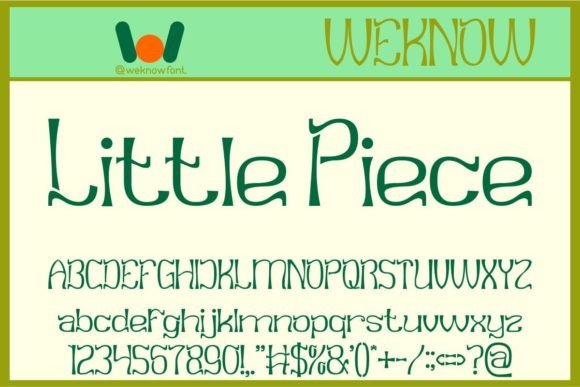
Little Piece: A Playful Font for Vibrant Branding
I was halfway through a branding project for a small café when I stumbled upon Little Piece. It wasn’t just any display font—it had that rare spark of mirth and playfulness that immediately caught my eye. As a designer, I know how crucial the right font can be in shaping a brand’s personality, and Little Piece felt like the perfect fit for this project.
Little Piece in Logo Design for a Creative Café
The first thing I did was test Little Piece on a rough logo draft for the café. The name itself, “The Happy Bean,” needed something whimsical yet professional. Little Piece brought exactly that—its curves and playful flourishes gave the logo a sense of warmth and approachability. I placed it at the center of the design, letting it take the lead while keeping the supporting text in a clean sans-serif font to balance the look.
What stood out was how well Little Piece worked as a logo font. It didn’t feel too childish or too serious—it struck that perfect chord between fun and sophistication. It made the café’s brand feel inviting, almost like a friend who always knows how to make you smile.
Bringing Little Piece to Life on Packaging Mockups
Next up was the packaging design. I wanted the labels and coffee bags to reflect the same playful energy as the logo. Using Little Piece on the front of the bag, I paired it with a minimalist serif font for the supporting details. This contrast helped keep the design from feeling cluttered while still maintaining a cohesive brand identity.
I tested Little Piece on different sizes and surfaces—from glossy paper to matte stock—and it held up beautifully. The font’s vibrancy translated well into print, making the packaging stand out on shelves without overwhelming the eye. It was clear that Little Piece could be a key player in creating a memorable brand presence.
Using Little Piece in Social Media Graphics and Website Headers
When designing social media assets, I found that Little Piece added a dynamic touch to Instagram posts and Facebook banners. Its lively character shone through in short-form text, like taglines or promotional messages. I used it in bold for headlines and then switched to a complementary sans-serif font for body copy to maintain readability.
On the website header, I experimented with Little Piece as the main headline font. The result was visually striking, especially when paired with a modern sans-serif for the navigation menu. It created a nice visual hierarchy and made the site feel more engaging and less corporate.
Little Piece for Branding Materials and Print Collateral
As I moved into creating business cards and flyers, I noticed how Little Piece adapted well to smaller formats. It looked great on a business card, where its compact size and legibility were key. I also used it on flyers and brochures, where it helped draw attention to the main message without sacrificing professionalism.
One thing I paid close attention to was ensuring that Little Piece didn’t overpower other elements in the design. When used sparingly, it added just the right amount of character without becoming distracting. It worked best as an accent font, highlighting key phrases or names rather than being used throughout the entire piece.
Font Pairing and Practical Considerations with Little Piece
Pairing Little Piece with other fonts was an important part of the process. I found that it complemented both serif and sans-serif fonts well, depending on the tone I wanted to achieve. For a more elegant look, I paired it with a classic serif font, while for a modern feel, I used a sleek sans-serif.
Another practical consideration was checking the font’s included styles and alternates. Little Piece offered several variations that allowed me to fine-tune the design for different applications. Whether I needed a lighter weight for headings or a bolder version for emphasis, the options were there.
I also made sure to verify the licensing terms before finalizing the font for use in the client’s brand system. Since the project involved commercial use, having a clear understanding of the font’s permissions was essential.
Final Thoughts on Little Piece for Real-World Branding
In the end, Little Piece proved to be a versatile and expressive choice for the café’s brand identity. From the logo to the packaging and everything in between, it helped create a consistent and engaging visual language. It wasn’t just about aesthetics—it was about communicating the right mood and emotion to the audience.
If you’re looking for a display font that brings energy and charm to your designs, Little Piece is definitely worth testing. Whether you're working on a logo, a poster, or digital content, it has the potential to elevate your work and leave a lasting impression on your audience.