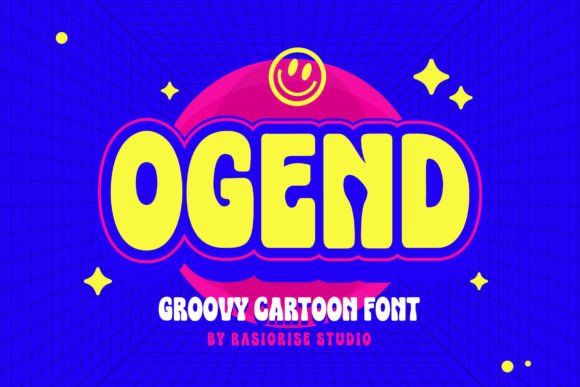
Ogend: A Retro Bold Groovy Sans-Serif Font for Web Design
Ogend for Creative Portfolio Headlines and Brand Identity
When I first tested Ogend on a creative portfolio homepage, the retro bold groovy sans-serif font immediately stood out. It had that nostalgic feel of classic typography but with a modern twist—something that felt fresh yet familiar. Ogend is a Display font, and its character set made it perfect for hero section headlines and brand titles. I used it for the main title over a full-screen background image, and it didn’t just sit there—it commanded attention.
The personality of Ogend leans into the playful side of retro design, which worked well for a designer’s portfolio that aimed to showcase creativity and innovation. The groovy curves and bold strokes gave the layout a unique visual identity without being overwhelming. I noticed that it performed especially well when paired with a clean sans-serif body font like Helvetica or Arial, creating a balanced contrast between decorative and readable typefaces.
Ogend in Online Store Banners and Product Landing Pages
I decided to test Ogend further by applying it to an online store banner for a boutique fashion brand. The goal was to create a sense of fun and nostalgia while maintaining professionalism. Ogend as a Fonts option allowed me to craft a call-to-action button with a retro flair that still felt approachable. I placed the headline “New Arrivals” in Ogend across a vibrant patterned background, and the text remained legible even from a distance.
One thing I learned during this process was the importance of spacing and line height when using display fonts like Ogend. Because of its boldness, I had to give it more room to breathe—especially on mobile screens where smaller screens can make dense text harder to read. Using Ogend for short phrases like “Shop Now” or “Limited Edition” helped keep the message clear and engaging without sacrificing the retro aesthetic.
It also worked well for product landing pages. When I used Ogend for feature titles such as “Handcrafted Quality” or “Unique Designs,” it added a layer of character to the content. However, I made sure not to use it for long paragraphs or body copy, since its style isn’t optimized for extended reading.
Ogend for Coaching Websites and Digital Campaigns
Next, I experimented with Ogend on a coaching website focused on personal development and lifestyle change. The brand wanted to convey energy and positivity, and Ogend’s groovy style fit perfectly. I used it for the main navigation bar and section headings, which gave the site a cohesive look that felt both professional and inviting.
On the home page, Ogend was used in a campaign-style hero section with the headline “Transform Your Life Today.” Paired with a high-quality background image of a sunrise, the font created a strong emotional impact. It was important to ensure that the color contrast was right—Ogend looked best in dark colors against light backgrounds or vice versa, depending on the mood we were trying to achieve.
For digital campaigns, Ogend proved to be a great choice for promotional banners and social media graphics. Its retro vibe aligned well with themes around nostalgia, self-expression, and individuality. I found that using Ogend in combination with a minimalist sans-serif for supporting text kept the design from feeling cluttered while still allowing the brand to stand out.
Ogend in Blog Headers and Editorial Design
While working on a blog redesign for a lifestyle publisher, I considered Ogend for header titles and article teasers. The retro style of Ogend brought a new dimension to the editorial layout, helping to differentiate the blog from other sites in the same niche. I used it sparingly—only for major headlines and subheadings—to avoid making the content feel too busy.
Readability was a key concern here. Since Ogend is a Display font, I made sure to pair it with a more traditional serif or sans-serif font for body text. This ensured that the reader could focus on the content without being distracted by the decorative elements. I also tested different weights and styles of Ogend to see how they performed in various contexts, which helped me find the right balance between style and function.
Another consideration was the file format and webfont availability. Ogend came with all necessary webfont files, which made it easy to implement on the blog without any performance issues. The font loaded quickly and rendered consistently across different devices and browsers, which was essential for maintaining a smooth user experience.
Ogend for Course Sales Pages and Educational Content
Finally, I used Ogend on a course sales page for an online learning platform. The course was about retro design trends, so the font was a natural fit. I used Ogend for the main title, section headers, and featured course names, which helped reinforce the theme of the content.
Because the page needed to be both visually appealing and highly functional, I made sure that the readability of Ogend was maintained. I used it only for short, impactful phrases and avoided using it in areas where long-form text would be present. This approach helped maintain the clarity of the information while still giving the page a unique and stylish look.
Overall, Ogend proved to be a versatile and effective font for a wide range of digital projects. Whether used for branding, marketing, editorial content, or educational materials, it brings a retro bold groovy sans-serif style that feels both nostalgic and modern. As a web designer, I found that Ogend offered the right mix of character and usability, making it a valuable addition to any designer’s font library.