Random Story Font for Web Design and Digital Branding
Testing Random Story in a Hero Section for a Creative Portfolio
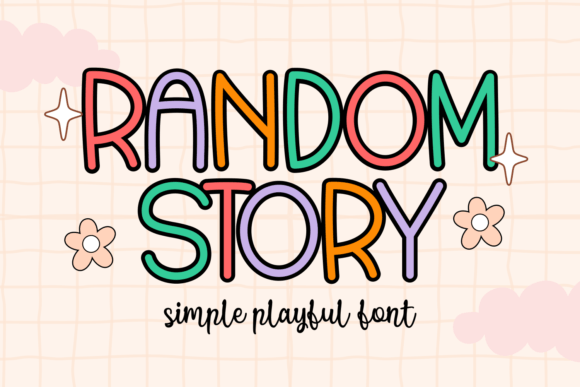
I was working on a redesign for a creative portfolio site when I came across Random Story, a display font that caught my eye with its playful yet clean style. The client wanted something unique to stand out from the usual sans serif fonts, and Random Story fit perfectly for the hero section. It added just the right amount of fun without losing readability.
As I placed it over a full-screen background image of a sketchbook, I noticed how well Random Story complemented the organic feel of the visuals. It didn’t overpower the design but instead pulled attention to the main headline, which read “Design That Speaks.” The contrast between the font’s whimsical curves and the sharp lines of the sketchbook made the message pop.
Random Story for Online Store Banners and Product Headlines
Next, I tested Random Story in an online store layout for a boutique selling handmade stationery. The goal was to create a warm and inviting brand identity. Using Random Story for product headlines like “Handcrafted Invitations” or “Custom Greeting Cards” gave the banners a friendly, approachable tone.
I made sure to pair Random Story with a clean sans serif font for body copy to maintain readability. This combination helped balance the fun aspect of the display font with the need for clear information. On mobile screens, I adjusted the font size slightly to ensure legibility without sacrificing the charm of Random Story.
The result? A more engaging shopping experience where the typography supported the brand’s personality while keeping the user interface intuitive.
Using Random Story in Call-to-Action Areas for Course Sales Pages
For a course sales page targeting aspiring illustrators, I used Random Story in the call-to-action section. The phrase “Start Creating Today” stood out against a soft gradient background, drawing the eye naturally to the “Enroll Now” button.
What I liked about Random Story here was its ability to convey energy and creativity. It felt like the perfect match for a digital product aimed at artists who wanted to break free from traditional design norms. However, I kept the CTA button text in a simpler font to avoid visual clutter and ensure fast scanning behavior.
This taught me that while Random Story is great for display purposes, it works best as a supporting element rather than the primary text in interactive areas like buttons or links.
Random Story for Blog Headers and Editorial Content
In another project, I integrated Random Story into a blog redesign focused on modern web design trends. For post headers, it brought a fresh and dynamic feel to titles like “The Future of Typography” or “Minimalism Meets Fun.”
I found that using Random Story in this context helped reinforce the blog’s voice—playful yet professional. To keep things balanced, I paired it with a classic serif font for subheadings and body text. This font pairing created a nice contrast and improved overall visual hierarchy.
One thing to note: Random Story should be used sparingly in long-form content. Its character style is better suited for short phrases and headings rather than lengthy paragraphs.
Readability Tips for Using Random Story on Websites
When working with Random Story, I always check its performance across different screen sizes. On smaller devices, I make sure the font doesn’t become too cramped or hard to read. Increasing line spacing and using light backgrounds can help maintain clarity.
Another consideration is the color contrast. I’ve found that using a dark shade of gray or navy blue works best for Random Story on light backgrounds. If the background is dark, I opt for a lighter font color to preserve legibility.
Also, ensuring that Random Story is available as a webfont is crucial for smooth loading times. I always verify if the font includes all necessary weights, alternates, and multilingual support before using it in client projects or online stores.
Font Pairing Ideas with Random Story for Web Projects
To build a cohesive visual identity, I often pair Random Story with a complementary font. For example, combining it with a sleek sans serif like Montserrat for body text creates a modern yet expressive look. This is especially effective for landing pages or promotional campaigns that want to stand out visually.
If the brand has a more editorial tone, using a serif font like Merriweather alongside Random Story can add sophistication without losing the fun factor. This pairing is ideal for blogs, magazines, or any content-driven platform.
Always test the font combinations in real scenarios. What looks good in a mockup may not translate well to a live website, so it’s important to preview the design across various devices and platforms.